Article
07/04/2026
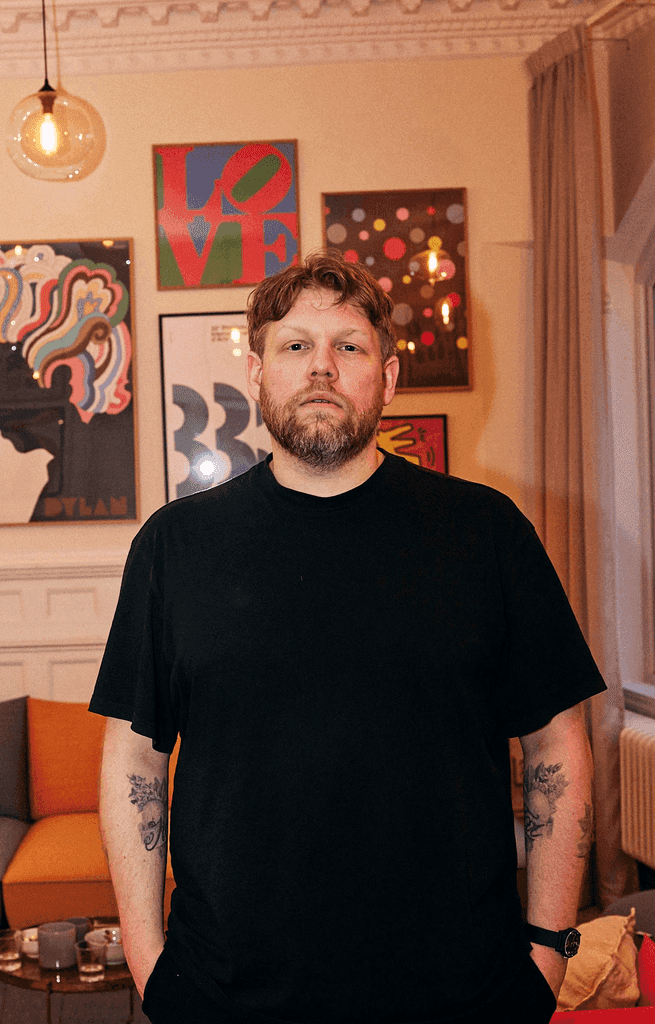
Matthias Beckman
Creative Director

“I don’t think you’ll find the answer I’m looking for. But then again, I’m not entirely sure what the question is.”
That’s how the CEO and owner of a SaaS company, one that had just posted its best year ever, opened our meeting. He wasn’t sure he wanted to continue the collaboration. Not because he disliked us or the work we had done so far. Something just felt unresolved.
I like him, both as a person and as a professional, so it wasn’t easy to hear. He was also clear that he appreciated our work, but he just wanted to be honest.
If anything, that made me like him even more.
By most measures, the company seemed to be in a very strong position. They had expanded into new markets, built a strong sales and delivery culture, and developed a product customers clearly experienced as delivering real value. The fundamentals were healthy: CAC, LTV and churn were all under control.
On paper, nothing was wrong.
Except for that question he couldn’t quite articulate. A question that, in many ways, already contained its answer. After one hour, three takeaway salads and a bowl of conference-room candy later, we wrapped up lunch. But not where we had started.
Instead, we left with a clear path forward. We would return with a proposal for how to structure the work together. What had happened?
We had managed to frame the question. When everything already works — product, sales, expansion, unit economics — only one question really remains. Not an operational question. An entrepreneurial one.
How far can I take this?
In his case, running a SaaS company, the question becomes slightly more specific.
What actually determines the size of the market we are building in?
When a company is already performing at the top of its own logic, a different kind of choice begins to appear. Either you continue optimizing what already works. Or you start asking whether the underlying value logic itself might be too small.
If we look at SaaS, we can see this pattern clearly. When companies reach the limits of their current performance logic, the response is often to push harder inside it – improve the product, expand distribution, accelerate growth. And that works. That is how companies are built.
But when all of those parts already function well, a different kind of limitation appears. Not in execution. In the value logic itself. The size of markets is not determined only by products or distribution. Markets are also shaped by what people begin to care about.
In other words: by culture.
Which is why the next level of value creation often requires something other than better features or more efficient growth loops. It requires understanding how meaning, identity and community begin to crystallize into a category.
That question is not really about product or growth. It is about how markets expand.
And to understand why that layer is so often invisible inside companies, we need to go back a bit.
Execution builds companies.
Culture expands markets.
For most of the twentieth century, the discipline of expanding a market appeared to be a single discipline – marketing. Inside the same department you could find brand strategy, advertising, product positioning, media buying and customer research. The boundaries between them were often blurry. That wasn’t a bug of the system.
It was the system.
Marketing was responsible for something larger than campaigns or communication. It was responsible for connecting companies to culture.
Advertising agencies proclaimed narratives about work, family, success and aspiration. Brands competed for attention, but also to define what people should care about.
Why did that work?
Because culture was far more shared. In many ways it functioned like a monoculture — a term borrowed from agriculture, where vast fields grow the same crop. In that kind of landscape, cultural signals travel quickly and with little resistance. Before culture became personalized, it was synchronized.
We watched the same television shows.
We followed the same sports.
We listened to the same albums.
A relatively small number of media outlets shaped the conversation. References travelled quickly. The conversations at coffee tables, lunch rooms and offices worked because most people had seen the same thing the night before.
In that environment, marketing could plausibly shape culture.
The system was imperfect, sometimes manipulative, often wasteful. But it had a certain coherence. Three functions lived together:
First, companies tried to create demand by interpreting culture and translating it into meaning.
Second, they tried to store that meaning in brands people recognized and trusted.
Third, they tried to harvest demand through distribution, media and sales.
In practice, all three activities were loosely bundled under the label marketing. But that cultural landscape has changed. Culture today rarely moves as a single stream. It travels through smaller currents — communities, subcultures, platforms and networks that do not necessarily share the same references.
Mass media still exists. Campaigns can still reach large audiences. But reach and cultural influence are no longer the same thing. In a fragmented cultural landscape, it becomes harder to articulate meaning from the outside. Messages travel widely, but they do not always organize culture in the way they once did.
Which changes the role organizations must play.
If culture can no longer be amplified through communication alone, it has to be embodied — in products, behaviors, communities and systems that people can participate in, rather than simply observe.
Culture, in other words, moves closer to the organization itself.
Which means organizations can no longer stand outside it.
The quiet split in marketing
As technology entered marketing at the turn of the millennium, it did more than transform the field. It fragmented it.
Performance marketing, growth teams and martech platforms become extraordinarily sophisticated at harvesting demand. Organizations can now measure almost every click, trace attribution across multiple channels and optimize campaigns in real time.
Marketing becomes a technical discipline. It is run by analysts, automation systems and dashboards. It is accountable to metrics like CAC, conversion rates and customer lifetime value.
And it works.
Companies have become very good at capturing demand that already exists. But while organizations were perfecting their demand harvesting machines, something else was happening quietly. The other two functions, the ones that once created and stored meaning, began to drift away.
Brand became a specialized craft, increasingly separated from the operational machinery of marketing. In many studios it moved closer to design, storytelling and identity systems.
At its best, culture followed along. Brand design studios often acted as interpreters of cultural signals — translating shifts in aesthetics, language and symbolism into identities companies could carry.
But as digital transformation became the dominant narrative, the center of gravity moved again. Brand systems slowly morphed into digital design systems. The people responsible for translating culture into expression were now designing interfaces.
The success of that work was measured less by cultural resonance, and more by usability, conversion and optimization. The era of the call-to-action as brand builder had begun.
Culture, meanwhile, did something stranger.
It slipped outside the organization entirely.
Culture fell between the chairs
One strange thing about modern organizations is how rarely markets are understood in cultural terms. Inside the company, growth is usually framed through product improvements, distribution and efficiency.
Culture appears easier to categorize as communication, branding or narrative than as a dimension of value creation. And yet markets rarely emerge simply because someone launches a product.
They emerge when culture decides something new matters.
Entire industries have appeared this way. Fitness was once a niche activity. Today it is a global market. Plant-based food moved from activist subculture to supermarket staple. Longevity, climate resilience and AI productivity are rapidly becoming cultural priorities with enormous economic implications.
From the outside this pattern is easy to see. From the inside it is much harder to treat as an economic mechanism. So the cultural layer of markets often slips between the chairs. Companies optimize product, distribution and efficiency — while the deeper shifts shaping future demand remain largely outside the frame.
You can see traces of this gap in an unexpected place. Call it the "Education Paradox"
Many creative programs still train students to produce campaigns — moments of attention built around ideas. Portfolios are filled with case films, advertising concepts and brand activations designed to interrupt culture for a moment.
For decades that reflected how the industry actually worked. But many of the companies that increasingly expand markets today operate differently. Their brands are not episodic expressions layered on top of a business. They are systems of meaning expressed through products, communities, platforms and the everyday behavior of the organization itself.
Much of creative education is still organized around the former. The market increasingly operates on the latter.
The result is predictable.
Culture comes to be treated as communication rather than as a force that expands markets.
Companies optimize the wrong system
When culture has no clear owner inside the organization, companies focus on what they can measure. They optimize conversion funnels. They refine messaging. They experiment with channels and formats. The system becomes better and better at competing for demand that already exists. It becomes extremely efficient at harvesting demand. But it does nothing to expand the market itself. This is why industries can feel both sophisticated and stagnant.
Inside organizations the conversations become increasingly precise — about CAC, attribution models, creative testing and conversion rates. All of it matters. But almost none of it answers the larger question.
Companies have become excellent at competing within existing markets. They are far less capable of expanding them. The organizations that manage to do both usually operate with a different logic.
They begin with culture.
Culture defines what becomes valuable
Culture is not simply a set of trends. It is the collective system of priorities that tells people what matters.
What is worth striving for.
What signals status.
What feels responsible.
What feels aspirational.
When those priorities shift, markets shift with them. But culture is diffuse. It cannot be acted on directly. Organizations need a way to compress cultural signals into something clearer.
They need meaning.
Meaning is a usable interpretation of culture. It takes a broad cultural current and articulates a point of view people can recognize and organize around.
Patagonia did not invent environmental concern. But it translated that concern into a clear cultural meaning: “We exist to save our home planet.”
Oatly did not invent plant-based milk. But it turned it into a cultural signal — part climate stance, part challenger identity — that millions of people could recognize and participate in.
Meaning makes culture legible. But meaning alone does not build markets.
Meaning must become real.
When meaning takes form, it begins to scale.
Meaning needs a form. Only then can it be recognized and shared.
Organizations often treat meaning as a communication exercise. A campaign. A manifesto. A positioning statement.
For a while this logic was fueled by the rise of “purpose-driven branding”. Research showed that purpose-led companies often outperformed their peers. But many organizations misunderstood the mechanism. Purpose was treated as an addition, rather than a foundation. A message rather than a system.
Something to attach to a brand after the business had already been designed.
Meaning only becomes economically powerful when it takes form – through products, services, symbols and rituals. And through the behavior of the organization itself.
When meaning becomes tangible, people can experience it rather than simply hear about it. That is when desire begins to organize. And that is where design enters the story.
Companies that successfully turn cultural meaning into markets do not rely on isolated initiatives. They build systems. The meaningful future they represent becomes visible across the organization. By design.
Business models that make the future economically viable.
Brands that make the future recognizable.
Territories where the future is socially present.
Internal cultures where employees actually live the values the company claims to represent.
When those systems align, meaning begins to scale. And when meaning begins to circulate through culture, markets start to form around it. People recognize it. They identify with it. They spread it.
Desire aligns.
Demand follows.
This logic may sound abstract.
But we have already seen companies move in this direction.
Figma: From product to platform
One company that illustrates this shift particularly well is Figma.
For those unfamiliar with the product, Figma began as a browser-based design tool, built around real-time collaboration in the cloud. When it appeared in the mid-2010s it challenged Adobe’s desktop tools with a simple idea: design should work like Google Docs — multiple people editing the same file in real time, directly in the browser.
At first, Figma’s growth looked like a classic product story. The tool solved real problems around collaboration, version control and accessibility.
By early 2019 the company had roughly one million users and raised a Series C that valued the business at about $440 million.
But around that time something more interesting began to happen.
Later that year Figma launched Figma Community, allowing designers to publish files that others could inspect, copy and remix. Interface systems, design kits and workflows became public artifacts rather than private production.
What had once happened inside individual studios became visible across the profession. Design practice itself became shareable. Adoption accelerated.
Over the following years Figma expanded the platform beyond interface design, gradually supporting more of the work that surrounds it — ideation, collaboration, presentation and development. The tool became less a single application and more a shared workspace for how modern product teams operate.
Each step extended the circle of people who could join. A shared culture of digital design began to take shape with the platform as a centerpience. Design was no longer the private craft of a single specialist working in isolation. It became a visible, collaborative practice.
And the numbers followed.
Figma eventually surpassed 12 million monthly active users, reached over 400,000 paying customers, and became used by 95 percent of the Fortune 500. Revenue crossed $1 billion in 2025, expanding into enterprise teams.
Along the way the company’s valuation moved from hundreds of millions to tens of billions of dollars — including a proposed $20 billion acquisition by Adobe and a later public market debut that briefly valued the company at roughly $50 billion.
Execution built the product. But culture, as in shared practice, participation and identity, expanded the market around it.
When culture becomes economic value
Modern organizations measure acquisition with precision, optimize conversion and refine distribution. All of this improves how efficiently demand can be harvested. But it does not answer the question: how do we as a company expand the value logic we operates within?
That is the missing layer of value.
Companies usually do not lack intelligence, capability or ambition. What might be missing is instead a clear way of connecting those capabilities to cultural change — and the new priorities that begin to emerge.
Product teams usually build features. Growth teams tweak distribution. Strategy teams analyze current market share and competition. Brand teams design expression. But the work of translating cultural change into new market logic rarely has a clear home.
Ask yourself where in your organization that ability sits. Who has the sense to spot a cultural movement, articulate its meaning, give it form through the organization, so that demand begins to organize around it.
The answer will differ from company to company. In some places, that work sits with strategy. In others, it sits with product, brand, design or the founder’s office.
What matters most is not where it sits, but whether it exists at all. And whether it has the mandate to shape the organization around it.
Because markets, in the end, do not expand through execution alone. They expand when organizations participate in the cultural shifts that redefine what people value.
Which brings us back to the question that started that lunch.
If everything already works, if the engine is humming, how far can this really go?
Maybe further than it looks right now.
With the right perspective.
And a willingness to move with the cultural tide.