Article
04/09/2026
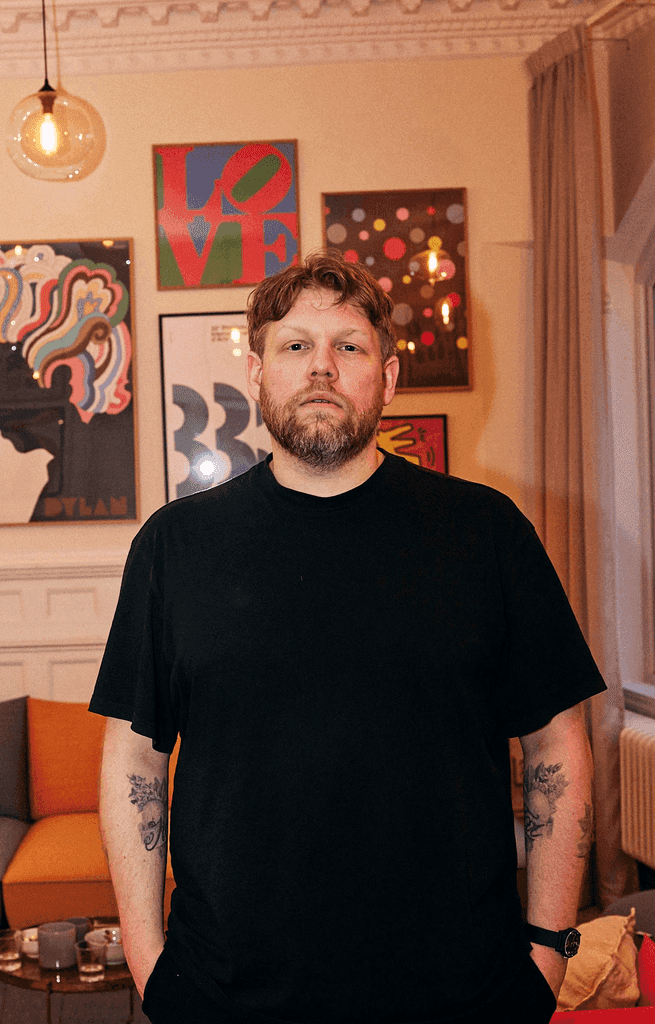
Matthias Beckman
Creative Director

You know the saying: Find someone who loves you as much as…designers love other designers. There’s a problem with that. And yes, it’s the reason why you still feel undervalued.
I’m a designer with a capital D. I love the work of making a future worth fighting for. And so naturally my feed, at times, flood with designer memes. If you haven’t seen them, let me boil it down for you:
Designers good.
Clients bad.
Despite the meme-format, the sentiment isn’t new.
It’s been around since I started working in the field about twenty years ago.
And naturally, it didn’t start with my generation.
The constant is that designers often feel undervalued.
Because they are.
And somebody is to blame.
And the easy thing is to look across the table and point fingers.
The client.
*cue thunder and scary lighting sound - tam tam taaam*
That’s wrong for at least two reasons.
First.
It makes some designers walk into the room ready to point fingers.
And then they’re surprised they’re not being heard.
Which is bizarre, because they are designers - they know that defensiveness rarely fuels attraction.
Second.
It does nothing to change how you’re valued.
It’s a losing game.
So what’s going on? The sharpest thing I’ve heard said about design in general, and about this specifically, came from Leland Maschmeyer in his interview with House of Unknown on YouTube.
”There is a market mismatch between what is being sold and bought.”
Sounds simple, but as he breaks it down, he articulates what I couldn’t – but have felt for years.
Basically designers see themselves as prophets.
We’re taught that the work is rooted in a worldview – how the world should work, and look and feel. Throughout design history, there has been a sort of moral code that is still present in todays design education.
That’s not wrong. I believe that too.
The problem arise when design prophecy is all you're offering.
Because that’s not what the demand side is buying.
Clients have a business problem. And they need a business solution.
And they are willing to spend money to solve it. And while we claim to have a solution, we sometimes end up selling a belief system – an ideal of how the world should be.
It's in that mismatch that designers start to feel undervalued.
And if you’re not with us, you must be against us, right?
Wrong again. Part of the designer’s work is to uncover and define problem in a way that can be shared. Not in a way that divides the room. I would go so far as to it's arrogant not to let a solution be evaluated from multiple perspectives – capital, commercial and cultural.
That’s how you create a future worth fighting for – for designers, for clients, and for everyone affected by what gets built.